
🔴 Introduction to Heart Attack (Myocardial Infarction)
Myocardial infarction which medical personnel denote as a heart attack stands as one of the most critical life-threatening emergency situations. A sudden blockage of heart blood supply by a blood clot triggers this condition. The obstruction leads to severe harm of heart muscle tissue which becomes fatal unless medical professionals treat the attack right away.
Heart attacks are growing more frequent across populations since people eat badly and remain sedentary and portal cigarettes and experience substantial stress. Quick medical assistance becomes essential at every passing moment because time remains the critical factor. The prompt medical attention establishes blood flow which saves heart tissue and enhances patient survivability.
❤️ What is a Heart Attack?
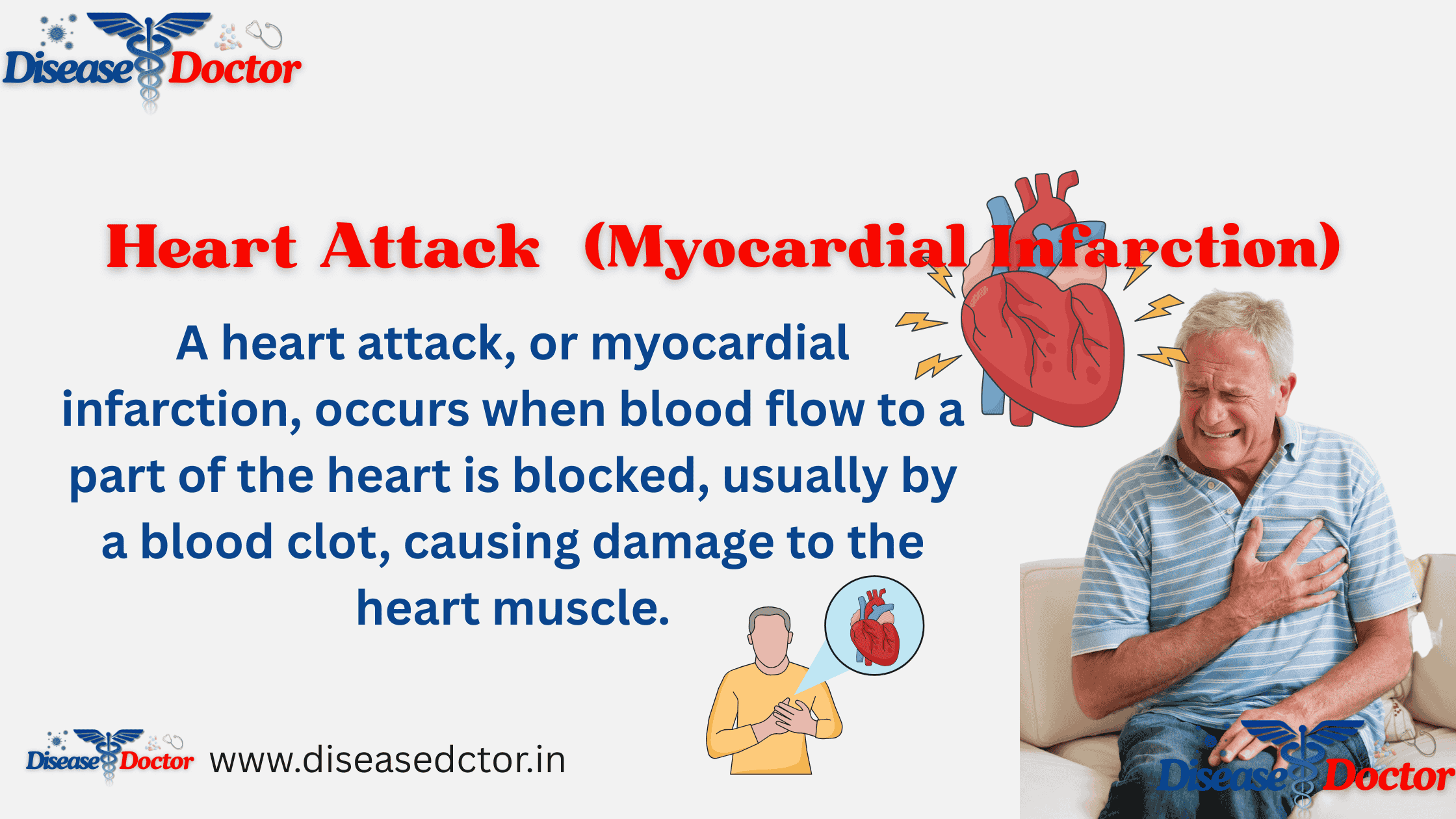
A heart attack develops because a blockage in coronary arteries prevents blood from reaching sections of heart muscle tissue abruptly. Blood reaching the heart arrives through these arteries which provide oxygen-rich blood supply.
Plaques that develop due to atherosclerosis create a blockage on artery walls which lead to the inner arteries. Heart muscle blood supply becomes interrupted when a plaque ruptures thus causing blood clots that block complete heart muscle blood flow. The heart tissue affected by diminished oxygen and nutrient supply proceeds toward death thereby causing a myocardial infarction.
Learning about the nature of heart attacks helps people detect warning signals at the first sign so they can get immediate medical help.
🔍 Causes of Heart Attack
Conditions which disrupt or block blood circulation in the heart muscle serve as the main causes of heart attacks. These represent the most typical origins of heart attacks:
🧱 Atherosclerosis
Plaques made of fatty materials build up inside arteries during atherosclerosis. The accumulation of plaques inside blood vessels becomes more solid over time until the arteries become too narrow for proper blood movement. A plaque rupture activates blood clot formation which results in heart attack occurrence.
🚧 Coronary Artery Blockage
Blood flow to the heart muscle originates from the coronary arteries. Total or serious blockages on these coronary arteries caused by plaque buildup or blood clots cut off heart tissue oxygen supply which causes myocardial infarction.
🩸 Blood Clots
A body forms a clot during plaque rupture to heal the affected area. When such a blood clot develops it entirely blocks the artery which denies essential blood flow to the heart muscle resulting in a heart attack.
⚡ Spasm of a Coronary Artery
A coronary artery might experience sudden spasming episodes which can reduce bloodstream flow to zero. The spasms affect even previously unblocked arteries under conditions of stress or smoking and drug use.
⚠️ Risk Factors
Multiple characteristics increase the chances of heart attacks developing in specific individuals. Some heart attack causes respond to lifestyle alterations yet several types cannot be modified.
✅ Major Risk Factors Include:
The risk factor of heart attacks increases as individuals get older; men after 45 and women after 55 are most at risk.
Smoking causes artery deterioration while simultaneously decreasing blood oxygen content.
The heart experiences higher workload because of obesity which also causes high cholesterol and diabetes.
The combination of hypertension causes damage to the arteries as it puts extra strain on the heart.
High Cholesterol: Leads to plaque formation in arteries.
Long-term blood sugar elevation from diabetes leads to permanent damage of blood vessels.
Lack of Physical Activity: Increases the chances of obesity and heart disease.
Unhealthy Diet: Consuming excessive amounts of salt, sugar, trans fats and processed foods is the root cause of heart issues.
Stress-Länge Stress kann Blutdruck erhöhen und lustvoll überessen oder rauchen.
Faculty History: If you could be familiar to the disease, your chance increases.

🚨 Common Signs and Symptoms
Knowing the early symptoms of a heart attack can make a difference in a life. Though some symptoms are abrupt, severe, many are gradual, with just faint distress. It is not advisable to treat any symptom lightly.
💔 Chest Pain or Discomfort
This is the most typical symptom. It often is said as pressure, soreness, fullness, or tightness in the middle or the left side of the chest. The pain will last only a few minutes or it will go away and come back.
😮💨 Shortness of Breath
You may feel you are unable to breathe with or without discomfort in your chest. It can feel like you can’t breathe in at all, even when you have nothing else challenging you.
🤢 Nausea, Sweating, Pain in Jaw/Arm
Other common symptoms include:
Nausea or vomiting
Cold sweats
Pain or discomfort in the carotid arteries that is one sided or on both sides, back neck jaw or stomach.
Feeling lightheaded or dizzy
📝 Note: Women may have different symptoms such as tiredness, nausea, or ache in the trunk or chin, even without chest ache.
🧪 Diagnosis of Myocardial Infarction
Early and accurate diagnosis is necessary when a heart attack is suspected. To determine if the patient is suffering a heart attack, doctors perform several tests and utilize different tools:
🧾 Electrocardiogram (ECG or EKG)
An ECG at origin detects the electrical activity of the heart and may show one (s) of the abnormal activity hinting that a heart attack or a past heart trouble.
🩸 Blood Tests (Troponin Levels)
The troponin test measures a sign of damage to the cells of the heart muscle of the troponin elevated levels of heart enzymes – that are in the blood. It is a significant indicator of heart attack.
📷 Coronary Angiography
A heart-specific X-ray test that uses dye contrast to view the coronary arteries. It aids in detecting the obstruction, as well as determine its severity.
💓 Echocardiogram
This test uses sound waves to create images of the heart, allowing for areas of the heart that may not be pumping properly because of poor blood flow to be viewed.
🖥️ CT or MRI of the Heart
More detailed imaging techniques to view the structure and operation of the heart, usually utilized if the other tests are unclear.
💉 Treatment Options
Sources state that immediate action is crucial in preventing the extent of the damage and saving a life during a heart attack. Mainly treatment methods are as follows:
🚑 Emergency Care
The 1st goal in a heart attack is emergency restoration of blood flow to the heart. Emergency responders may appreciate treatment as they insert oxygen, relieve pain, and administer life saving drugs during transportation to the hospital.
💊 Medications
Several drugs are commonly given to break clots, relieve pain, and lessen heart injury:
Aspirin – Prevents further clotting.
Thrombolytics-Thrombolytics are also called “clot busters,” which dissolve existing blood clots in arteries.
Beta-blockers – Decrease the heart’s workload and prevent additional ones.
ACE inhibitors – Assist the heart in pumping more easily.
Statins – Reduce bad cholesterol and stabilize the buildup in the arteries.
🧴 Angioplasty and Stent Placement
Also referred to as Percutaneous Coronary Intervention (PCI), this is one of the most common urgent procedures. A tiny balloon is used to open the blocked artery, a stent (very small amount of wire mesh tube) is inserted to keep blockage from closing off again and restoring blood flowing.
🫀 Coronary Artery Bypass Surgery
In severe cases or if several arteries are blocked, a bypass surgery is performed. Surgeons remove a blood vessel from the body and creates a new path for blood to reach the heart by bypassing the blocked artery.
🏥 First Aid for Suspected Heart Attack
Timing can be everything, as saving a life can be achieved quickly. If you think someone is having a heart attack:
✅ Steps to Take Immediately:
Call Emergency Services (e.g., 108 from India) – Time is of the essence. Every second matters.
Assist the Person to Sit Down – If possible have them sit on the floor resting on a wall to relieve strain on the heart.
Loosen Tight Clothes – Focus on the neck as well as the chest.
Take Aspirin (If not allergic) – One 325 mg tablet can assist thinning the blood.
Reassure the Person – Stay calm and still with the person until help arrives.
If the Person Becomes Unconscious – Start CPR if trained. Chest compressions should be done at the rate of 100–120 per minute.
📝 Do not delay to see if symptoms subside—go to the emergency room right away!
🛡️ Prevention Tips
Recovering from heart attack is a process of heart management thus every single day to prevent a heart attack you have to take care of your heart. While things like age or family history can’t be altered, many can be managed or eliminated by living a healthy lifestyle.
💪 Here is How to Minimize Your Risk:
🥗 Eat a Heart-Healthy Diet
Add every fruit, vegetables, whole grains, low fat proteins, and healthy fat. Steer clear of packaged foods, too much salt, sugar, and artificial fats.
🏃 Exercise Regularly
Shoot for at least 30 minutes of moderate action the majority of the days—such as walking, biking, or swimming.
🚭 Quit Smoking
It is well known that cigarettes are a hazard. Giving up greatly reduces the risk of heart attack.
🧘 Manage Stress
Has a long-term stress can lead to high blood pressure and unhealthy behavior. Try relaxation techniques such as meditation or practicing deep breathing.
⚖️ Maintain a Healthy Weight
Gun weight burden on your heart. A balanced diet and regular exercise should also be used to control weight.
💉 Regulate Blood Pressure, Cholesterol & Diabetes
Monitor these numbers with regular check-ups and many prescription drugs if needed.
🚫 Limit Alcohol
Drink in moderation—if at all. Heavy drinking can harm the heart.
🔄 Recovery and Rehabilitation
Outliving a heart attack is only the first step of the road. Recovery and rehabilitation are very important in order to tap the body’s strength, avoid future heart condition and the good quality of life.
🏥 Cardiac Rehabilitation Programs
These medically supervised programs include:
Exercise training
Education about heart-healthy living
Preoperative counseling to reduce stress They are meant to allow Safe handling of patients and Recovery in order to Get to be active again.
💊 Medications & Lifestyle Adjustments
Following a heart attack, beta-blockers, statins, blood thinners and ACE inhibitors are frequently prescribed. It’s primary to shop for precisely as directed by your doctor.
📅 Follow-Up Care
Routine visits to a cardiologist allow for the tracking of progress and the changes to the treatment. It is also possible to monitor blood pressure, cholesterol and overall heart health.
📊 Heart Attack Statistics and Facts (India & Global)
Heart attacks continue to be one of main reasons for death globally and India has the mounting cases of heart problems most especially among younger lot.
🇮🇳 India-Specific Data:
In the majority of Indians, half of all heart attacks occur below 50 years of age and 25 years below, says the Indian Heart Association.
Urban life, stress and sedentary lifestyle are mainly responsible for growing heart disease cases.
India contributes to a fifth of deaths due to cardia disease globally.
🌍 Global Perspective:
Over 17.9 million deaths worldwide are due to heart diseases annually, as per WHO, and with myocardial infarction being a major cause.
The Heart attacks affects both men and women, however the symptom may differ.
Lifestyle related diseases such as diabetes and hypertension are now world-wide pandemics creating heart related problems.
📢 Although these alarming stats are, knowledge, regular checkups, and lifestyle changes are very effective in the prevention of a Heart Attack.
🧬 Complications of Untreated or Delayed Treatment
Delaying treatment of a heart attack or ignoring the symptoms can lead to serious complications, some of which can be potentially life-threatening:
Heart Failure: When the damaged heart muscle fails to pump blood well, ends up resulting in persistent exhaustion, edema, and shortness of breath.
⚡ Arrhythmias: Any uneven rhythms can go on after a heart attack, and some of them can be life threatening if they are not controlled.
💣 Cardiac Arrest: A sudden and complete stop of heart function. What is needed right away is CPR and defibrillation.
🩸 Cardiogenic Shock: Heart failure, unable to pump enough blood to meet body’s requirements = organ failure.
🧠 Stroke: A clot or diminished blood flow in myocardial infarct can boost the risk of brain stroke.
📚 Conclusion: Importance of Early Detection and Prompt Action
Around the clock, at any minute, for any of us, a heart attack can happen. Knowing the signs, when to seek help quickly and you lead a healthy way of life are your best weapons. Detect early, treat promptly, and have regular check-ups – they can add years to your life.
🛡️ Whether you are a young adult, middle aged or senior now is the time to take heed of heart health! Keep getting health check, stay GYM, eat GYM, and teach GYM to all around.
NOTE – you need to know about Chronic Obstructive Pulmonary Disease (COPD)